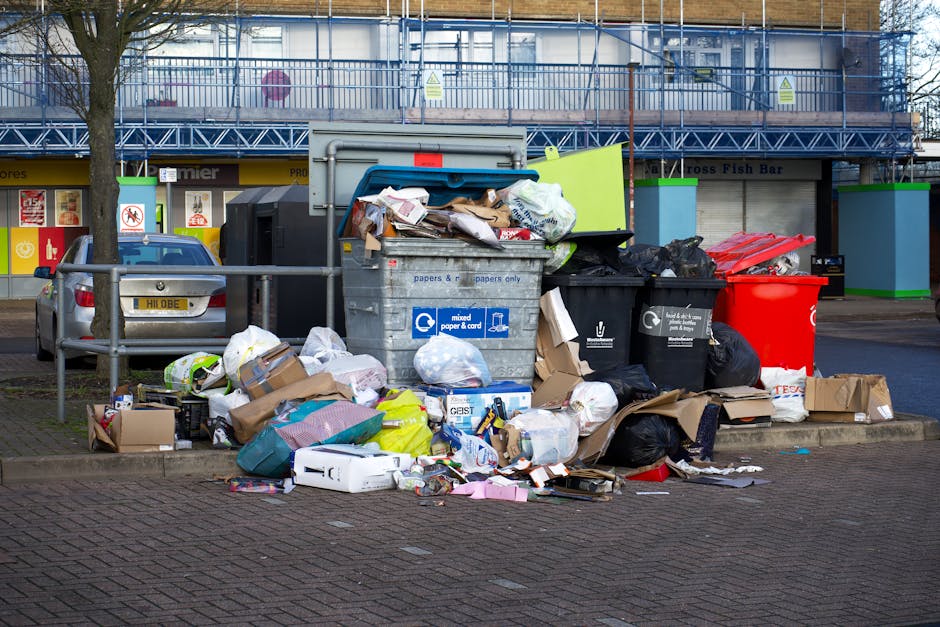
Alexandra Park Road garden rubbish clearance tips: a practical local guide
If your garden has tipped from "a bit untidy" into full-on pile-up mode, you are not alone. Alexandra Park Road garden rubbish clearance tips are most useful when you want the job done properly, without damaging plants, blocking access, or creating a second mess in the process. A few smart decisions at the start can save you hours later, and honestly, they make the whole thing feel much less overwhelming.
Whether you are clearing away hedge cuttings, broken fence panels, old pots, soil bags, or the random pile that somehow appeared after a weekend of pruning, the same principles apply: sort well, load safely, dispose of waste responsibly, and keep the space workable while you do it. In this guide, you will find a step-by-step approach, common mistakes to avoid, and a few practical tips that local householders and landlords tend to appreciate once the dust settles.
For readers who may need a broader service, it can also help to understand how a professional garden clearance service fits into a bigger property tidy-up, especially when the work overlaps with items from a shed, garage, or even a full home clear-out.
Contents
- Why Alexandra Park Road garden rubbish clearance tips Matters
- How Alexandra Park Road garden rubbish clearance tips Works
- Key Benefits and Practical Advantages
- Who This Is For and When It Makes Sense
- Step-by-Step Guidance
- Expert Tips for Better Results
- Common Mistakes to Avoid
- Tools, Resources and Recommendations
- Law, Compliance, Standards, or Best Practice
- Options, Methods, or Comparison Table
- Case Study or Real-World Example
- Practical Checklist
- Conclusion
- Frequently Asked Questions
Why Alexandra Park Road garden rubbish clearance tips Matters
Garden rubbish has a habit of spreading out. One cut branch becomes a pile, the pile gets wet, then the wheelbarrow track gets muddy, and suddenly the whole garden looks worse than before you started. Clear, sensible clearance tips matter because they help you control the process rather than chase it.
On Alexandra Park Road, where properties can have narrow side access, front-garden visibility, or shared boundaries, the way you move waste matters just as much as the waste itself. If you leave bags exposed too long, they can split. If you drag thorny branches across paving, you risk scratches and trip hazards. If you mix green waste with soil, timber, or broken garden furniture, disposal becomes more awkward than it needed to be. Not impossible, just annoying. And nobody needs that on a Saturday morning.
Good clearance also protects the parts of the garden you actually want to keep. A small bit of planning can save border plants, lawn edges, and paving joints from accidental damage. It is the sort of thing people only notice after the job is finished: the garden looks better, but the whole place still feels intact.
For bigger projects, it may be worth looking at related support such as waste removal when the job includes mixed rubbish rather than just clean green waste. That can be a more practical route than trying to separate everything yourself on the driveway.
How Alexandra Park Road garden rubbish clearance tips Works
At its simplest, garden rubbish clearance works in three stages: gather, sort, and remove. The detail is in the sorting. Green waste, woody waste, soil, rubble, old planters, and broken outdoor items do not always belong in the same pile, and the more carefully you separate them, the smoother the removal becomes.
In a typical local garden, the process often starts with a walk-through. You identify what is staying, what is going, and what might be reusable. Then you decide whether the waste can be bagged, bundled, stacked, or kept loose for loading. Finally, you move it to a sensible collection point, ideally somewhere that does not block doors, bins, or neighbour access.
Truth be told, the best results often come from boring discipline. Nothing glamorous. Just steady, ordered work. If you are dealing with larger quantities, a professional team can usually help by taking bulk green waste, garden furniture, and mixed outdoor debris in one visit, which is especially handy when time is tight.
You may also find the company's recycling and sustainability approach useful if you want a clearer idea of how garden waste can be handled with less landfill reliance where possible.
Key Benefits and Practical Advantages
There are the obvious benefits, of course: a cleaner garden, easier access, and a more presentable outdoor space. But the practical advantages go a bit further than that.
- Better safety: Less clutter means fewer trip hazards, sharper edges, and hidden slips on wet leaves or mossy patches.
- Faster completion: When waste is separated early, collection or loading is much quicker.
- Less stress: You do not end up with multiple half-finished piles sitting around for days.
- Cleaner boundaries: Neighbours are less likely to be affected by overflow, overspill, or access issues.
- Better disposal options: Proper sorting makes it easier to recycle or divert suitable materials.
There is also a subtle but important benefit: it changes how the space feels. A garden full of debris tends to make people delay further maintenance. Once it is cleared, the next task feels manageable. You notice that patch of lawn again. You can hear birds instead of the rustle of plastic sacks. Small thing, maybe. But it matters.
If you are comparing services for a larger property tidy-up, the broader home clearance option may also be relevant where indoor clutter and outdoor rubbish are being tackled together. That can keep the process simpler and more cost-effective overall.
Who This Is For and When It Makes Sense
This sort of clearance is not just for major renovations. In practice, it suits anyone dealing with a garden that has accumulated too much material for the usual bin round or a quick tidy-up.
- Homeowners preparing for spring pruning or autumn leaf fall
- Landlords refreshing a rental between tenancies
- Older residents who want the garden safer and easier to use
- Busy families who have let cuttings, toys, and outdoor odds and ends build up
- Property managers dealing with overgrown or neglected outdoor spaces
- Anyone whose DIY project has generated more waste than expected
It also makes sense if you have a deadline. Maybe you are expecting guests, planning a sale, or simply want the garden looking decent before a run of warmer evenings. There is something very satisfying about clearing a space before the weather turns. You feel that change in the air and think, right, now is the time.
For mixed loads that include old garden furniture, broken chairs, or outdoor storage items, you may also want to explore furniture disposal or furniture clearance, depending on how much of the load is no longer usable.
Step-by-Step Guidance
A tidy, sensible method is usually better than trying to do everything in one frantic push. Here is a practical way to approach garden rubbish clearance on Alexandra Park Road.
- Walk the garden first. Check what has to go, what can be trimmed, and what may need special handling. Look for hidden items under hedges, behind sheds, and in corners where things tend to accumulate.
- Separate by material. Put green waste together, timber together, soil or rubble separately, and keep general rubbish out of those piles if possible. It makes later disposal much smoother.
- Set a collection route. Decide how waste will leave the garden. Through the side passage? Across the lawn? Via the front path? Use the safest route, not the shortest one.
- Bag or bundle where useful. Light clippings go well in sacks. Branches are often easier to move when tied. Heavy soil should be kept in manageable amounts. Do not overfill anything. Your back will not thank you.
- Protect surfaces. Lay boards or a temporary covering where wheelbarrows or heavy bags may scrape paving. This matters more than people think.
- Keep sharp items visible. Broken glass, rusty metal, and splintered timber should never be buried in a mixed pile. Mark them clearly so nobody gets a nasty surprise.
- Load in stages. If you are using a vehicle or waiting for collection, keep the heaviest items low and spread the weight. Better balance, fewer problems.
- Do one final sweep. Check for nails, twine, screws, small plastic tags, and bits of wire. Those little leftovers are what make a garden feel unfinished.
A useful rule of thumb: if a pile starts to look messy before it is moved, stop and sort it again. That extra ten minutes can save a lot of hassle later. Honestly, it usually does.
Expert Tips for Better Results
Here are the kind of tips that come from doing the job in the real world, not from a neat little checklist on a screen.
- Work from the farthest point back to the exit. It prevents you from walking over areas you have already cleaned.
- Use a "dirty zone" and a "clean zone". Keep the waste in one area and your tools, valuables, and clean paving in another.
- Cut waste down before moving it. Long branches and awkward stems are easier to handle if reduced first, provided it is safe to do so.
- Watch the weather. Wet leaves and damp sacks get heavier. A dry morning can make the same job feel half as hard.
- Be careful with soil. Soil is deceptively heavy. A bag that looks fine when half full can become impossible once it is packed tight.
- Think about access early. If there is a narrow side gate or shared path, measure the awkward items before you start shifting everything around.
One small human truth: most clearance jobs are slowed down by the stuff nobody thought about at the start. The pot with broken handles. The old parasol base. The half-buried brick lump. You know the sort. If you spot those early, you are already winning.
And if the work is part of a wider tidy-up after building or landscaping, the builders waste clearance page can be a useful reference for dealing with heavier mixed debris alongside garden material.
Common Mistakes to Avoid
Most clearance headaches are preventable. The same mistakes show up again and again, and they are usually easy to avoid once you know what to watch for.
- Mixing everything together. Green waste, soil, timber, and general rubbish are not all the same. If you mix them, disposal becomes harder and sometimes more expensive.
- Overfilling bags. This makes them awkward to lift and much more likely to split.
- Leaving waste where it blocks access. Front paths, side alleys, and shared entrances should stay clear. Safety first, always.
- Ignoring hidden sharp objects. Broken pots, wire ties, nails, and pruned branches with thorns can catch people out quickly.
- Starting without a plan for the largest items. Large branches, heavy planters, and old fencing need a route and a removal method.
- Waiting too long in damp weather. Once waste gets soaked, it gets heavier and more unpleasant to handle.
There is also the old mistake of doing the easy bits first and leaving the awkward ones until the end. Fair enough, we all do it sometimes. But in clearance work, the awkward pieces are usually the pieces that determine whether the job feels smooth or chaotic.
Tools, Resources and Recommendations
You do not need a mountain of specialist equipment to clear garden rubbish well, but a few reliable tools make life much easier.
| Tool or Resource | Best For | Why It Helps |
|---|---|---|
| Heavy-duty sacks | Leaves, clippings, light mixed garden waste | Easy to lift, stack, and separate |
| Wheelbarrow | Moving waste across lawns or paths | Reduces carrying strain and speeds up loading |
| Tarpaulin or groundsheet | Temporary staging of waste | Keeps pathways cleaner and helps when sorting |
| Gloves with grip | Handling thorns, splinters, and rough debris | Better control and a bit more protection |
| Secateurs or loppers | Cutting back branches into manageable sizes | Makes awkward waste easier to move |
| Collection service | Bulk, mixed, or time-sensitive jobs | Useful when you want the waste gone in one go |
If you are trying to keep costs and logistics under control, it is worth checking pricing and quotes before deciding whether to handle everything yourself. A clear quote can help you compare options sensibly rather than guessing.
For storage-heavy gardens or places with old items tucked away in a corner, the garage clearance service can also complement the garden work nicely. Sometimes the real problem is not the lawn at all. It is the stuff around it.
Law, Compliance, Standards, or Best Practice
Garden rubbish clearance is not usually complicated from a legal point of view, but there are still important best practices to follow. In the UK, householders remain responsible for ensuring waste is handed to a legitimate carrier and not fly-tipped. That is the main thing to keep in mind.
Good practice also means being sensible about segregation. Clean green waste is one thing; mixed waste with soil, timber, plastics, and metal is another. Separating them wherever possible supports recycling and avoids avoidable contamination. It also gives the collection team a fairer chance to handle the load efficiently.
Safety matters too. Garden waste often hides sharp edges, insects, slippery moss, and awkward weight distribution. Gloves, proper lifting, and a clear route are not overcautious extras. They are just practical. The same goes for checking whether fences, sheds, or nearby fixtures need to be moved or protected before you start.
When a service provider is involved, it is reasonable to expect clear communication about handling, safety, and waste transfer. If you want a sense of how a business approaches these responsibilities, you can review the company's health and safety policy and insurance and safety information. Those pages are useful because they show what should be addressed before the first sack is lifted.
For businesses or landlords managing regular outdoor waste, the broader business waste removal page may be relevant where garden rubbish is part of ongoing premises maintenance rather than a one-off tidy-up.
Options, Methods, or Comparison Table
Different gardens call for different approaches. There is no single perfect method, which is frustrating if you want a tidy answer, but useful if you want the right result.
| Method | Best for | Pros | Trade-offs |
|---|---|---|---|
| DIY bagging and binning | Small amounts of light green waste | Low cost, flexible, simple | Slow for larger jobs; bin limits can be restrictive |
| DIY with a hired vehicle | Moderate mixed waste | More control over timing and sorting | Requires lifting, loading, and transport effort |
| Professional garden clearance | Bulky, heavy, or awkward loads | Fast, convenient, less physical strain | Cost depends on load size and complexity |
| Combined property clearance | Outdoor and indoor clutter together | One coordinated job, fewer moving parts | May be more than you need for a simple garden tidy |
For many people, the deciding factor is not just price. It is time, access, and physical effort. If you have to carry heavy waste through a narrow passage, the cheapest option can quickly become the most exhausting one. A slightly higher-cost solution may actually be better value. That is just the honest version.
Case Study or Real-World Example
A typical Alexandra Park Road scenario might look like this: a small front garden has become crowded with pruned branches, cracked plant pots, an old bamboo support frame, a broken bench, and a few bags of soil left after a planting project. Nothing dramatic. Just enough to make the entrance feel cluttered and awkward.
The homeowner starts by separating soft green waste from the heavier items. The branches are cut into shorter lengths, the pots are grouped by material, and the old bench is set aside for disposal rather than pushed into the middle of the pile. A tarp is laid on the path so the paving stays cleaner while the waste is moved. It takes longer than just throwing everything into one heap, but not by much.
By the end, the front of the property looks open again. The gate swings properly, the path is clear, and there is no leftover pile for the next rain shower to soak through. The odd thing is, the garden does not just look tidier. It feels more usable. You notice that when the work is done before lunch, and the day still has some light in it.
That is usually the point where people realise they did not need a huge project. They just needed a sensible system.
Practical Checklist
Use this quick checklist before you begin or before a collection is arranged.
- Confirm exactly what needs to go and what should stay
- Separate green waste, wood, soil, and general rubbish
- Check for sharps, nails, glass, and thorny cuttings
- Measure awkward items if access is tight
- Clear a safe route from the garden to the exit
- Prepare bags, tarps, gloves, and lifting help if needed
- Keep paths, doors, and shared access points unobstructed
- Decide whether the job is suitable for DIY or better handled professionally
- Confirm how mixed waste will be handled
- Do a final sweep for small debris once the main waste is removed
Expert summary: the best garden rubbish clearance is rarely the fastest-looking one at the start. It is the one that keeps access clear, protects the garden you are keeping, and makes disposal straightforward at the end.
Conclusion
Alexandra Park Road garden rubbish clearance tips are really about making one messy task feel manageable. Sort first, move safely, keep the route clear, and think about disposal before you start hauling anything. That is the simple version, and it works.
Whether you are clearing a few bags of clippings or dealing with a bigger mix of green waste and old outdoor items, a calm, organised approach will usually save time and reduce mistakes. And if the job feels larger than expected, that is not a failure. It just means the pile was sneakier than it looked.
For more background on the team and the way services are handled, you can also review the about us page. If you are ready to discuss your own clearance needs, the most direct next step is to get in touch through the contact page.
Get a free quote today and see how much you can save.
Clear the clutter, keep the garden breathing, and give yourself a space that feels good to walk into again.
Frequently Asked Questions
What is the best way to start garden rubbish clearance on Alexandra Park Road?
Start with a full walk-through and separate the waste into simple groups: green waste, wood, soil, and general rubbish. Once it is sorted, the rest becomes much easier.
Can I put all garden waste in one pile?
You can, but it is usually not the best idea. Mixed piles are harder to move, harder to recycle, and more awkward if there are sharp or heavy items hidden inside.
Is it better to clear the garden myself or book a service?
DIY works well for lighter, smaller jobs. If the waste is bulky, heavy, or difficult to access, a professional clearance is often the less stressful option.
How do I deal with soil and rubble from a garden project?
Keep soil and rubble separate from green waste if possible. They are heavier, and mixing them with branches or leaves makes loading and disposal harder.
What should I do with old garden furniture?
Set it aside as a separate stream of waste. If it is still usable, it may be worth keeping or rehoming; if not, consider a furniture-related disposal route rather than mixing it into the garden pile.
How can I avoid damaging paving or plants during clearance?
Use a planned route, avoid dragging waste across delicate surfaces, and place a tarp or boards in high-traffic areas. It sounds basic, but it helps a lot.
What are the most common mistakes people make?
Overfilling bags, mixing different waste types, and forgetting about access are the big ones. Sharp debris and wet waste cause trouble too, especially if they are left until the end.
How long does garden rubbish clearance usually take?
That depends on the amount of waste, the access, and how well it is sorted. A small tidy-up can be quick; a mixed or overgrown garden can take much longer.
Do I need to worry about compliance when getting rid of garden waste?
Yes, in a practical sense. You should only hand waste to legitimate carriers and avoid fly-tipping risks. It is also sensible to separate waste where possible and keep the process safe.
Can garden clearance be combined with other property clearance work?
Absolutely. If you have items in a garage, loft, or throughout the house as well, a combined approach can be more efficient than splitting everything into separate jobs.
What if my garden waste includes broken fencing or heavy branches?
That is still manageable, but it usually needs more care. Break larger items down where safe, keep sharp ends visible, and consider a service that handles mixed or heavier loads.
How do I know if I need professional help?
If the waste is too heavy to lift safely, the access is awkward, or the job has grown into a half-day or full-day task, it may be worth getting a quote and comparing options before you begin.